
From Text Messages to Actionable Signals with AI
The Check-In That Changes Everything
Every morning at 6:30 AM, your foremen receive a simple text: "How's the site looking today? Any needs?"
Most reply in under 30 seconds. A quick message, typed with one thumb while drinking coffee:
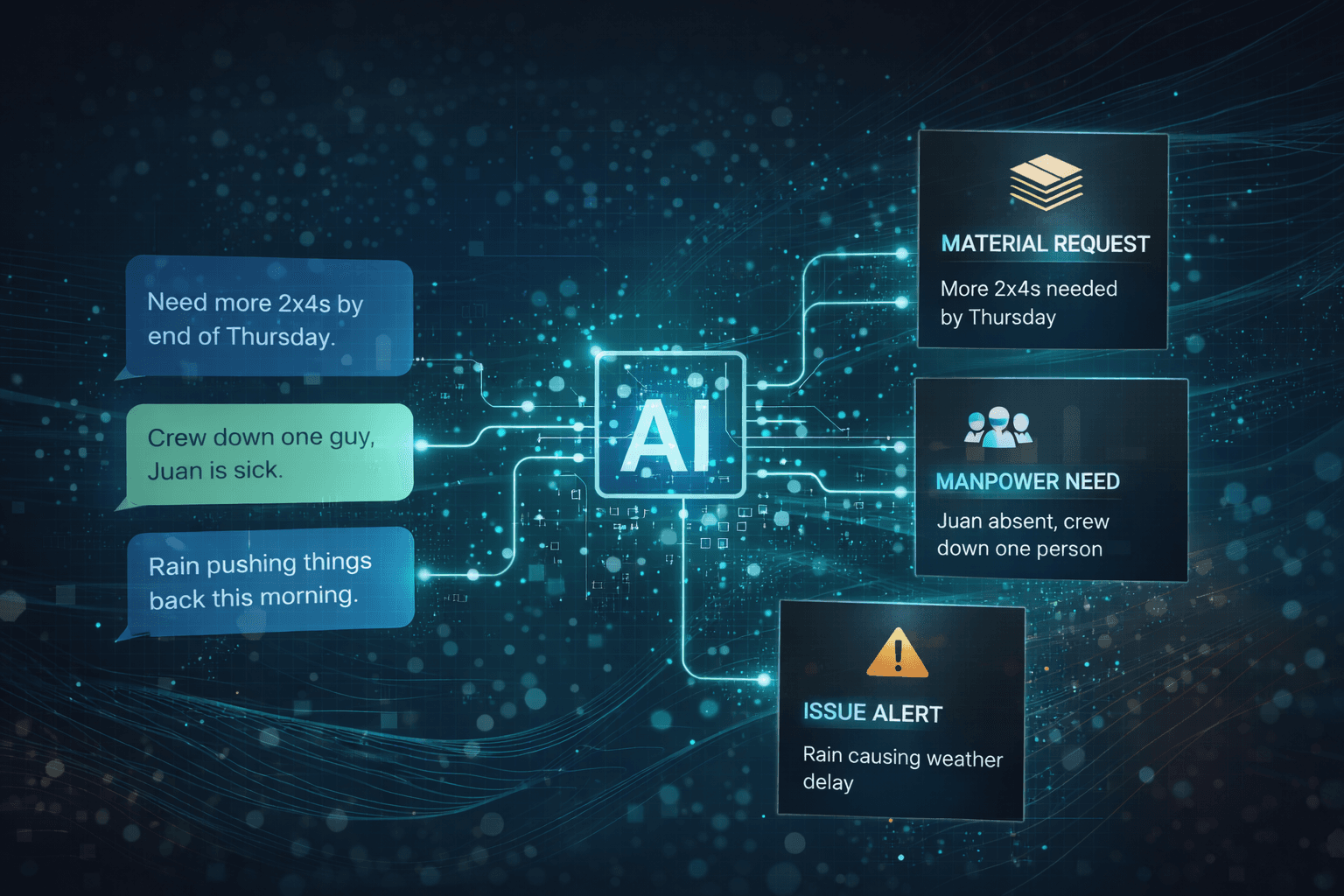
"Good here. Need more 2x4s by Thursday. Also down one guy, Juan called in sick."
In the old world, this message sits in someone's inbox. Maybe it gets seen, maybe it doesn't. The lumber order might happen, or it might get forgotten in the chaos of the day.
With AI, that single text becomes three distinct signals: a material request, a manpower gap, and a site status confirmation.
How AI Reads Between the Lines
Modern language models don't just look for keywords. They understand context, intent, and urgency.
When a crew member texts "running low on copper fittings, probably need more by end of week," the AI recognizes:
What: Copper fittings (material)
When: End of week (timeline)
Urgency: "Running low" suggests it's not critical yet, but will be soon
This gets categorized, logged, and—if configured—automatically pushed to your procurement workflow or flagged for a project manager to review.
Turning Chaos Into Clarity
Across 10 sites, your teams send maybe 50-100 messages a day. Without AI, someone has to read every single one, mentally parse the important bits, and manually enter data into various systems.
It's not sustainable. Things slip through.
AI acts as a tireless reader that processes every message in real-time:
Material requests get extracted and queued
Manpower issues get flagged immediately
Safety concerns trigger priority alerts
Weather delays are noted and logged
Completion updates feed into progress tracking
The Human Stays in the Loop
This isn't about replacing human judgment. It's about giving humans better information faster.
A project manager reviewing their morning dashboard sees a clean summary: three material requests, one site reporting weather delays, all crews staffed except Site 7. They can take action in minutes instead of spending an hour piecing together information from scattered texts and calls.
The foreman who sent that text? They didn't have to learn anything new. They just responded to a message like they always have.
From Reactive to Proactive
The real shift happens when you've been collecting this data for a few weeks. Patterns emerge:
Site 3 always needs more drywall than estimated
Rainy Mondays consistently cause two-hour delays
One subcontractor regularly reports issues on Fridays
Now you're not just responding to problems. You're anticipating them. AI doesn't just read your texts—it helps you see what's coming.